

Iran Floods the Market: 20 Million Barrels Loaded in Six Days as U.S. Strike Threat Looms
Satellite data reveals a dramatic surge in tanker loading at Kharg Island — nearly triple January's pace — as Tehran races to monetize its oil before a potential U.S. military strike.

An Unmistakable Pattern
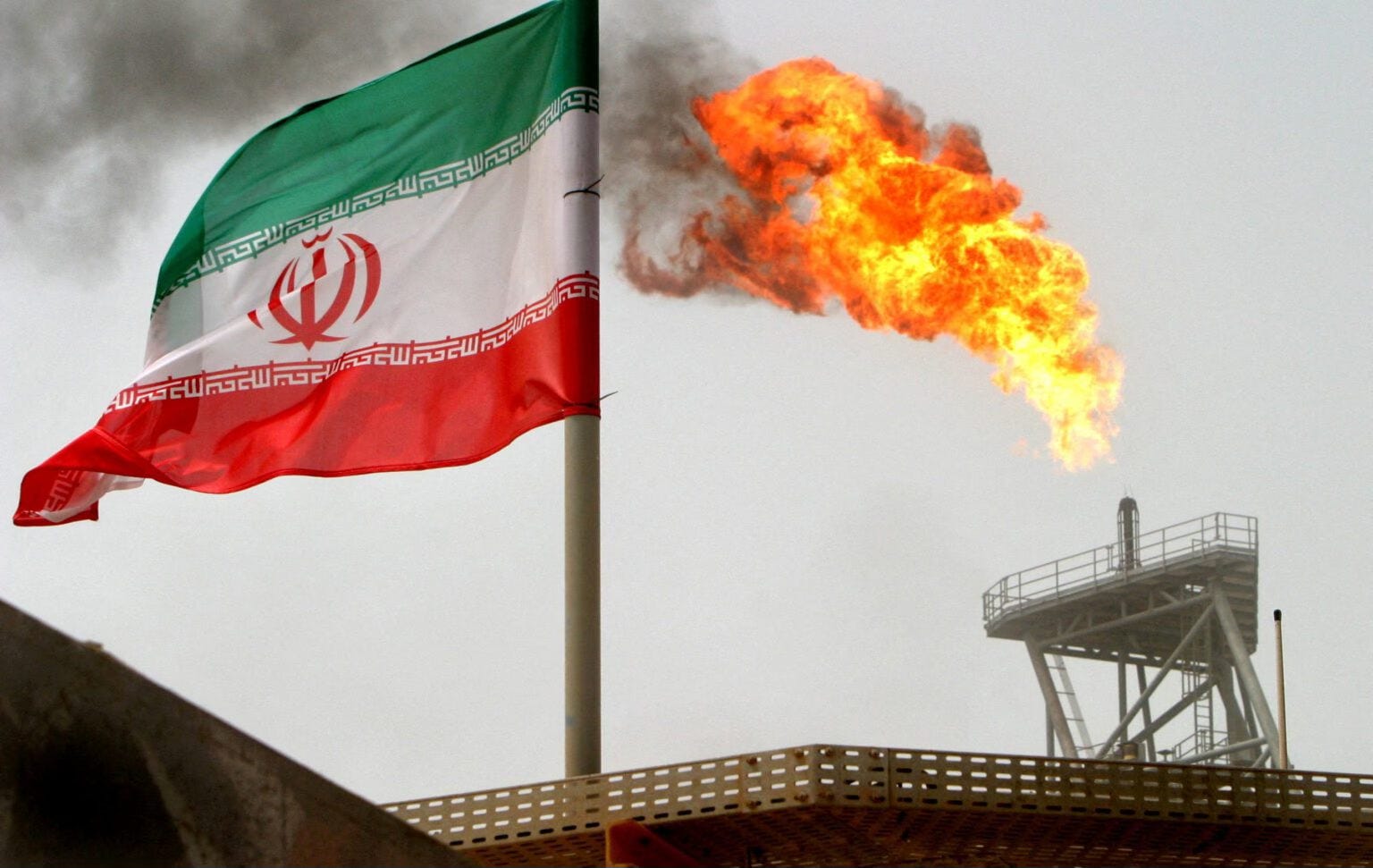
Between February 15 and 20, Iran loaded approximately 20.1 million barrels of crude oil onto tankers at Kharg Island, according to data from commodity analytics firm Kpler — a volume equivalent to more than 3 million barrels per day and nearly three times the amount loaded over the same dates in January. The surge did not occur in a vacuum. It coincided directly with the United States assembling what Pentagon officials have described as the largest military force in the Middle East since the second Gulf War in 2003, and with nuclear negotiations between Washington and Tehran that have yet to produce a diplomatic resolution capable of defusing the standoff. The pattern is not new: near-identical loading spikes were observed at Kharg Island shortly before U.S. air strikes last year, and again in 2024 during a distinct period of elevated bilateral tension.
The strategic logic is straightforward, if stark. Iran’s oil production and export revenues are a foundational pillar of the regime’s economic survival and its capacity to fund military programs, proxy forces, and domestic patronage networks. By offloading as many barrels as possible onto dispersed tankers before any potential disruption, Tehran can effectively monetize its crude even if Kharg Island’s terminal infrastructure is struck, damaged, or subjected to a naval blockade at the Strait of Hormuz. The ocean, in this context, functions as a distributed strategic reserve — one that is far harder to interdict than a fixed export terminal.
What the Satellites Saw
The satellite record compiled by Bloomberg and TankerTrackers.com provides granular confirmation of the surge’s scale and deliberateness. The number of tankers observed in waters southeast of Kharg Island more than doubled between February 15 and 20, rising from eight vessels to eighteen — a concentration of tonnage that is difficult to explain by routine commercial demand. A partial snapshot taken on February 22 showed nine tankers still anchored in the area, suggesting the loading operation remained active well after the initial surge period. Concurrent imagery analysis indicated that crude storage tanks on the island began drawing down in direct correlation with the arrival of vessels, consistent with a coordinated clearance strategy rather than opportunistic commercial loading.
Bloomberg’s analysis suggests that at least seven storage tanks were full on February 15, while by February 20, six were visibly depleted. Samir Madani, co-founder of TankerTrackers.com — a firm specializing in satellite imagery analysis of global tanker movements — confirmed that Iran had been loading at an elevated pace and noted that the island’s storage was at approximately 67% capacity over the weekend, having been as high as 88% on January 26, when Kharg held an estimated 30 million barrels in inventory. Madani estimated that February’s overall Iranian exports would average between 1.5 million and 1.6 million barrels per day — a figure dragged upward by the aggressive loading activity since mid-month.
The Dispersal Scenario
Madani was explicit about what happens next: tankers “will definitely disperse away from the island in case of a new round of air strikes.” This dispersal strategy is well understood by Western intelligence and military planners, and it has a precedent that Iran has refined over multiple cycles of tension and near-conflict. Once barrels are loaded onto vessels and those vessels clear Iranian territorial waters, they become significantly harder to interdict — particularly when operating under flags of convenience, with obscured AIS transmissions, and through ship-to-ship transfer networks that can obscure cargo origin across multiple handoffs before delivery.
For tanker market participants, the surge creates a short-term demand signal within the shadow fleet ecosystem, as Iran requires vessels willing to operate in defiance of sanctions at a moment when the risk premium is rising. Any sudden disruption to Iranian flows — through military strikes, a declared naval blockade, or an escalation that triggers voluntary avoidance by commercial operators — would ripple through freight rates and refinery feedstock availability from the Persian Gulf to East Asian processing hubs that have become structurally dependent on discounted Iranian crude.
The Bottom Line
The data from Kharg Island tells a story that diplomatic communiqués cannot obscure: Tehran is behaving as though it believes a military confrontation is plausible within a meaningful near-term horizon, and it is acting accordingly to protect its most critical revenue stream. Whether or not U.S. strikes materialize, the loading surge has already achieved a partial strategic objective — barrels are at sea, revenues are being locked in, and the leverage of a potential Kharg Island interdiction is diminished. The sea, once again, is being used as a geopolitical instrument. The maritime industry finds itself, as so often before, at the intersection of commerce and conflict.