

Japan Plants Missiles Near Taiwan — and China Hits Back With Trade Sanctions
Tokyo deploys air defense missiles 70 miles from Taiwan, abandoning decades of strategic ambiguity — and drawing an immediate, targeted economic response from Beijing.


A Strategic Commitment Made Concrete
Japan is deploying Chu-SAM Type-03 medium-range air defense missiles on Yonaguni Island, Defense Minister Shinjiro Koizumi confirmed at a press conference on February 24 — a move that translates Prime Minister Sanae Takaichi’s landmark election pledge into hardware in the ground. Yonaguni, the westernmost inhabited island of Japan, sits just 70 miles east of Taiwan, making it a node of extraordinary strategic sensitivity in any scenario involving Chinese military action against the island. Koizumi stated that deployment planning and preparation are underway, with full permanent air defense infrastructure expected to be in place by 2030 at the earliest, though field-deployed Chu-SAM systems are believed already to be operational on the island.
The political foundation for the deployment is as significant as the deployment itself. On February 8, Japan held a parliamentary election in which Takaichi and her Liberal Democratic Party secured 316 of 465 seats — a historic supermajority that surpassed the previous governing party record of 308 seats won by the Democratic Party in 2009. Takaichi had campaigned explicitly on abandoning Japan’s decades-long policy of strategic ambiguity regarding Taiwan, declaring that any Chinese intervention against the island would be regarded as a direct attack on Japan’s maritime, economic, and security interests. The deployment of Chu-SAM systems on Yonaguni is the first concrete manifestation of that mandate — and it is unlikely to be the last.
The Weapon and Its Strategic Logic
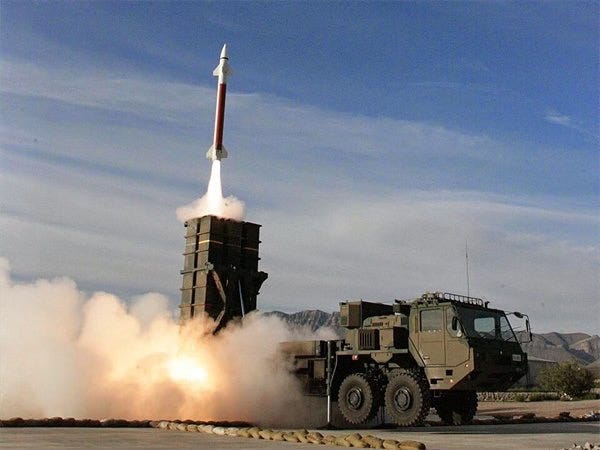
The Chu-SAM Type-03 is a capable, domestically developed Japanese air defense system that flies at Mach 2.5, features an active AESA radar homing seeker with inertial guidance backup, and can simultaneously track up to 100 targets while engaging 12. It is designed for full interoperability with the U.S. Patriot system, reflecting the deep integration of Japanese and American air defense architectures under the bilateral alliance. The system is in contention for a number of overseas orders, indicating its maturity as an export-competitive platform.
The system’s range from Yonaguni does not extend to Taiwanese airspace — a point that carries its own deliberate political subtlety. Tokyo is not, formally, positioning a system designed to defend Taiwan directly. What Chu-SAM on Yonaguni can do, however, is engage a Chinese PLA Navy and Air Force screening force operating east of Taiwan in an attempt to establish a maritime and air blockade that would isolate the island from reinforcement via the Pacific — precisely the operational concept that U.S. and Japanese military planners regard as among the most likely opening moves in a Taiwan contingency. In denying that option, Japan would be protecting its own maritime approaches while simultaneously complicating Beijing’s most viable coercive playbook.
Beijing’s Calculated Response
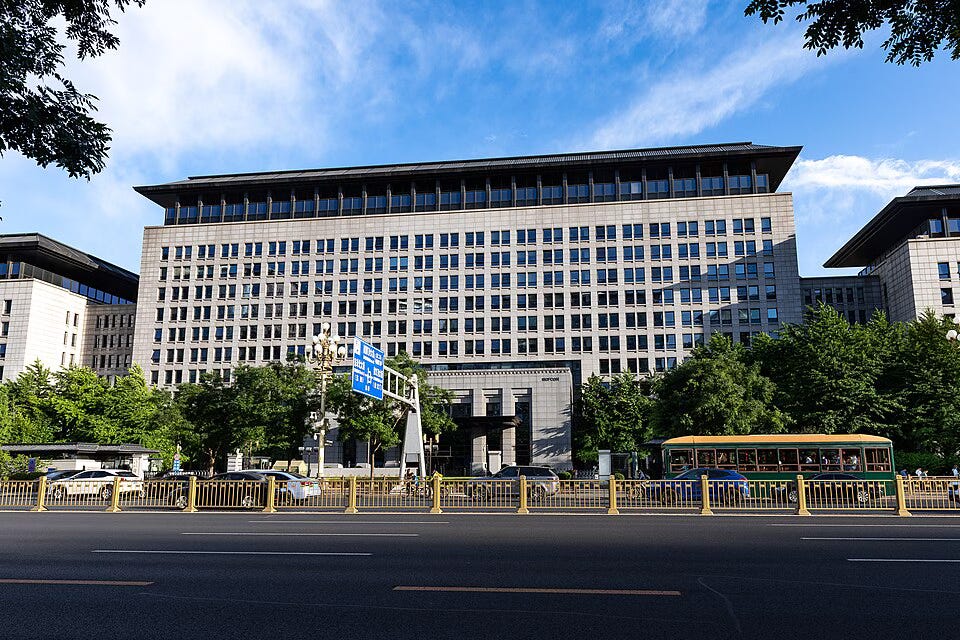
China’s response was immediate, targeted, and clearly designed to impose economic costs on Japan’s defense industrial base. China’s Ministry of Commerce announced the imposition of export controls on dual-use items affecting 20 Japanese companies, including Mitsubishi and Japan Marine United — two of the most significant participants in Japan’s defense shipbuilding and industrial ecosystem. An additional 20 Japanese companies, including Subaru, ENEOS, and Sumitomo Heavy Industries, were placed on a “List of Concern,” requiring risk assessments and written commitments before receiving Chinese exports of controlled items.
The restrictions are expected to target Japan’s access to rare earths and specialty metals — materials that are critical inputs to missile system manufacturing, advanced electronics, and naval construction. Japan’s dependence on Chinese rare earth supplies has long been identified as a strategic vulnerability, and Beijing is now deploying that leverage deliberately. Japanese officials responded by demanding the immediate lifting of restrictions and lodging what they described as a “strong protest” with Beijing, calling the controls “intolerable.”
The Naval and Maritime Calculus
For the naval and maritime community, the Yonaguni deployment represents a structural inflection point in the Indo-Pacific security architecture. Integrated with the broader JMSDF surveillance network, U.S. alliance sensor grids, and the growing web of allied maritime patrol capabilities operating across the first island chain, a fortified Yonaguni significantly complicates any Chinese attempt to establish sea control east of Taiwan. It also signals to Washington, Seoul, Canberra, and Manila that Tokyo is willing to assume forward risk — a posture shift that will materially affect alliance burden-sharing calculations across the region.
The Bottom Line
Japan has made its bet, and it is a large one. In abandoning strategic ambiguity, Tokyo is accepting an elevated risk of Chinese economic and potentially military coercion in exchange for a credible deterrence posture that passive hedging could no longer provide. The rare earth export controls suggest Beijing understands the message clearly — and is already probing for leverage points to push back. The East China Sea has entered a new era of explicit strategic competition, and the maritime domain sits at its center.