

VLCC Rates Near Six-Year Highs as Iran War Risk Reshapes the Tanker Market
With rates tripling to $151,000/day and Sinokor cornering 10% of the VLCC fleet, the tanker market is one Hormuz incident away from an unprecedented supply shock.

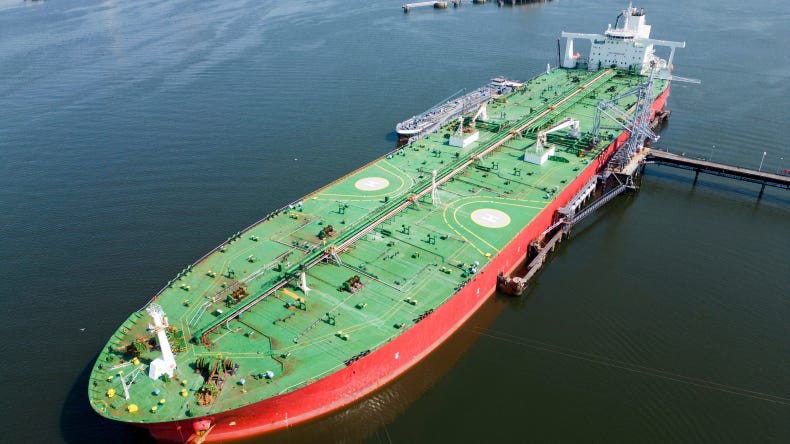
With the US amassing forces in the Middle East and President Trump stating Iran had 10 to 15 days to reach a deal over its nuclear programme, VLCC charter rates continue to climb. A potential military assault could disrupt traffic through the Strait of Hormuz — the chokepoint through which roughly a quarter of the world’s seaborne oil trade flows — sharply raising the risk premium for shipowners and charterers alike.
Baltic Exchange data show VLCC earnings on the Middle East-to-China route have tripled in 2026 to approximately $151,208 per day, the highest level since 2020. Analyst Anoop Singh of Oil Brokerage Ltd. stated bluntly that “military action in the Middle East will likely take VLCC rates to levels not seen since 2019.” Supertanker earnings on the US Gulf-to-China route are also at their highest since late 2022.
A structural shift in ownership concentration is amplifying the market’s sensitivity. South Korea’s Sinokor Merchant Marine, reportedly acting in coordination with MSC’s Gianluigi Aponte, has accumulated control of roughly 120 VLCCs — approximately 10% of the global fleet of 1,032 operational supertankers. The price of a 10-year-old VLCC has risen by $20 million in just six weeks, now standing at around $105 million per vessel. Shipbroker Fearnleys, in its weekly report, noted: “2026 is the year of the horse — and it is galloping at full speed as far as the tanker market goes,” adding that Sinokor now controls roughly 25% of the compliant tramping VLCC fleet, “leaving charterers with very slim pickings for alternatives.”
The tension is already altering vessel behaviour at the chokepoint itself. Some VLCC operators have begun transiting the Strait of Hormuz at speeds of up to 17 knots — well above the typical 13-knot maximum for a laden supertanker — after Iran announced live-firing drills in the area. Others are loitering off Oman before entering the waterway, waiting for cargo and berthing schedules to be confirmed before committing to the passage. Kenneth Hvid, CEO of Teekay Tankers, captured the market mood: “Right now it’s more in anticipation of something happening. It’s just a situation we need to watch.”